


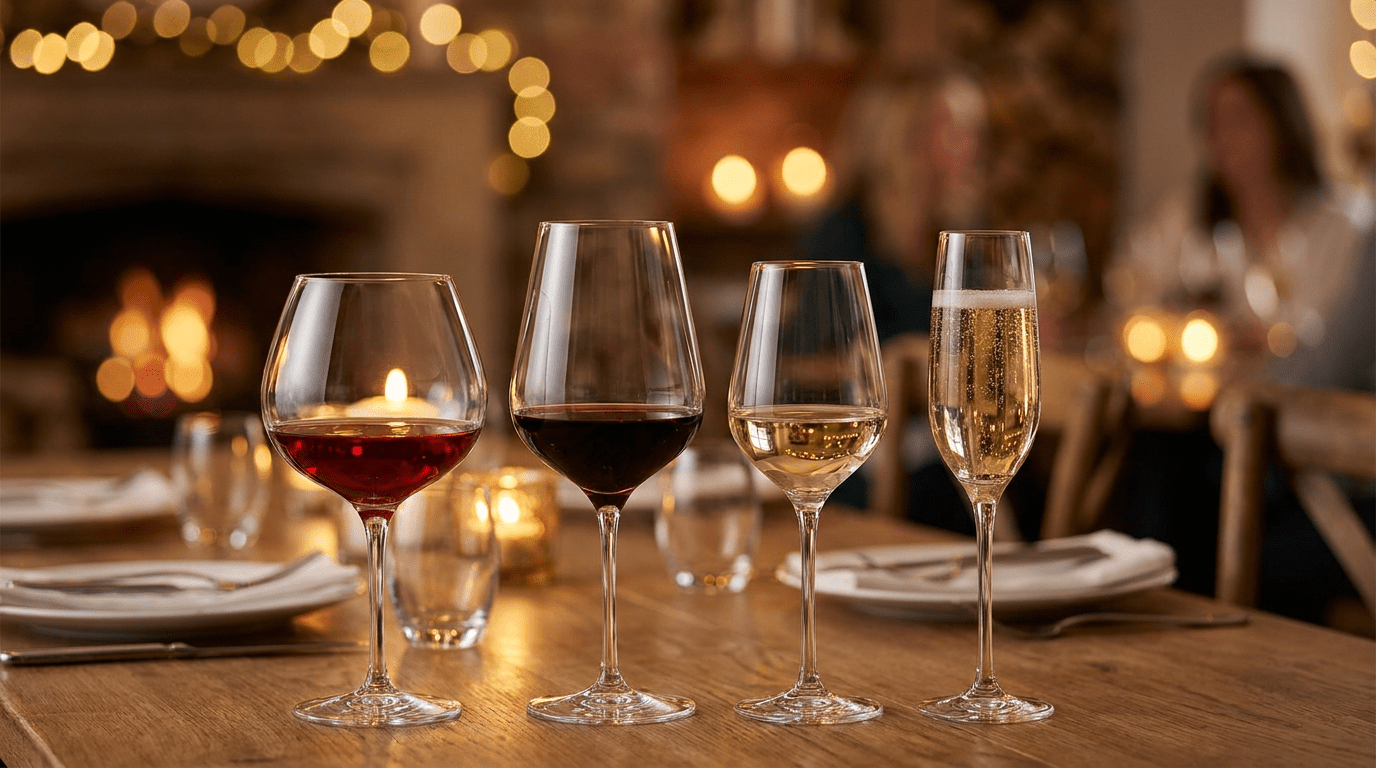
You buy a beautiful bottle of wine, pour it into the first glass you find in the cupboard, and think: this tastes pretty good, doesn’t it? Yet you’re missing out on part of the flavor. The shape of the glass determines how much aroma you smell, how quickly the wine warms up, and where the wine touches your tongue. In this guide, we explain step by step which wine glass suits which wine—red, white, rosé, champagne, and dessert wine—with a handy overview, a tasting tutorial, and specific recommendations.
Why does the glass make a difference?
A wine glass is not just a cup with a stem. Each part has a function, and together they influence how the wine smells, tastes, and feels. These are the four factors that make the difference:
The bowl
A wider bowl provides more air contact, allowing powerful wines to open up. A narrow bowl keeps fresh aromas together.
Oxygen
Swirling brings air into contact with the wine. The larger the surface area, the more the wine “breathes” and releases its aroma.
The rim
A rim that curves inward concentrates the aromas toward your nose. A thin rim lets the wine flow more smoothly into your mouth.
The stem
Holding the stem—not the bowl—keeps your wine at the right temperature. The warmth of your hand quickly warms white wine and champagne.
The anatomy of a wine glass
Before we look at each type of wine, it helps to know the different parts. That way, you’ll immediately understand why a Burgundy glass differs from a champagne flute.
Quick overview: which glass for which wine?
In a hurry? This table gives you, at a glance, the right glass and the ideal serving temperature for each type of wine.
| Wine type | Glass shape | Capacity | Temperature |
|---|---|---|---|
|
Powerful red wine Bordeaux, Barolo, Shiraz |
Large Bordeaux glass, tall tulip shape | 55–70 cl | 16–18 °C |
|
Elegant red wine Pinot Noir, Burgundy, Gamay |
Round Burgundy glass, wide bowl | 65–80 cl | 14–16 °C |
|
Full-bodied white wine Oaked Chardonnay |
Slightly larger white wine glass | 40–50 cl | 10–13 °C |
|
Crisp white wine Sauvignon Blanc, Riesling, Pinot Grigio |
Narrow, tall white wine glass | 30–40 cl | 8–10 °C |
| Rosé | Small to medium-sized glass | 30–45 cl | 8–10 °C |
| Champagne & sparkling wine | Flute or tulip-shaped glass | 15–25 cl | 6–8 °C |
| Dessert wine, port & sherry | Small stemmed glass | 12–20 cl | 6–14 °C |
The five glass shapes side by side
From left to right, you can see how the shape changes with the wine: the more powerful and aromatic the wine, the rounder the glass; the fresher the wine, the narrower the glass.
Red wine: round or tall?
Red wine generally needs the largest glass. The spacious bowl gives the wine room to open up and release its complex aromas. Still, there is an important distinction between two classics.
The Burgundy glass – for elegant red wine
You can recognize it by the wide, rounded bowl that narrows slightly again toward the top. That rounded shape provides plenty of air contact at the bottom, making it ideal for more delicate grapes such as Pinot Noir, Gamay, and Burgundy wines. The narrowing rim captures the subtle, fruity aromas and directs them toward your nose.
The Bordeaux glass – for powerful red wine
Taller and slightly narrower than the Burgundy glass, with a pronounced tulip shape. Perfect for full-bodied, tannic wines such as Cabernet Sauvignon, Shiraz, Barolo and Bordeaux blends. The shape directs the wine toward the center of your tongue, where its power comes into beautiful balance.
White wine: small keeps it cool
White wine is served chilled, which is precisely why the glass is smaller and narrower. Less wine in the glass warms up less quickly, while the narrower bowl keeps the fresh, aromatic scents together. For sparkling Sauvignon Blanc, Riesling or Pinot Grigio, choose a sleek, tall glass. For a fuller, oak-aged Chardonnay, the glass can be slightly more spacious, allowing the wine to get a little air too.
Rosé: the middle ground
Rosé sits between white and red when it comes to glassware. Since rosé doesn’t need to “breathe” and is served chilled, a small to medium-sized glass works best – often the same glass used for white wine. A light bowl that flares slightly outward allows its fresh, fruity notes to shine. Serve at 8–10 °C.
Champagne & sparkling wine
With sparkling wines, it’s all about the mousse: you want to keep it lively for as long as possible. A flute – slender and tall – is the classic choice: the bubbles rise beautifully in a long stream. Want to smell the aromas of a rich Champagne more clearly too? Choose a slightly wider, tulip-shaped version. Always serve well chilled, at 6–8 °C.
Dessert wine, port & sherry
Sweet and fortified wines are served in small quantities, so a small stemmed glass is ideal here (12–20 cl). The modest bowl concentrates the intense, sweet aromas and prevents the often higher alcohol from becoming overpowering. Ideal as a finishing touch to dinner.
Tutorial: how to taste wine in 5 steps
The right glass is the beginning – with this short tasting routine, you’ll get even more out of it.
- Don’t overfillFill the glass to about one-third full (the widest point of the bowl). This leaves room to swirl and collect aromas.
- Look at the colorHold the glass at an angle against a light background. Color and clarity reveal the wine’s age and grape variety.
- Swirl gentlyRotate the glass a few times by the stem. This mixes oxygen into the wine and releases its aromas.
- Smell carefullyPut your nose in the glass and take short sniffs. This is where the glass does its work: you perceive 80% of taste through smell.
- Taste attentivelyTake a sip and let the wine move around your mouth for a moment. Notice the difference between the initial impression, mid-palate and finish.
One glass for everything
Don’t want a cupboard full of different glasses? Then choose one large glass with a tulip-shaped bowl (around 45–55 cl). In this universal glass, both red and white wine come into their own – there’s enough room for red wine to breathe, while it’s controlled enough to keep white wine cool. The ideal choice if you only want one set.
Looking for something with French flair instead of sleek crystal? Also take a look at La Rochère’s distinctive pressed glasses, such as the Abeille wine tasting glasses with their iconic bee motif.
Care: how to keep your glasses sparkling
- Wash by handUse warm water and a small amount of mild dish soap. Crystal and thin rims are vulnerable in the dishwasher.
- Hold the bowl, not the stemThe stem is most likely to break during washing. Carefully support the bowl.
- Dry with a microfiber clothThis prevents limescale spots and streaks. Polish after holding it up to the light.
- Store uprightOn the base, not on the rim. This prevents damage and unpleasant odors in the bowl.
Our recommended products
Looking for the right glass? This is our selection by wine type from the Glazen.nl range.


Frequently asked questions
Does it really matter which wine glass you use?
Yes. The shape determines how much aroma you smell and how the wine reaches your tongue. Especially with complex red and white wines, you can taste a clear difference between a suitable glass and a random one. For everyday house wine, a good universal glass is more than sufficient.
Can I drink red wine from a white wine glass?
You can, but the wine gets less exposure to air and opens up less. For a light red wine, it’s not a major problem; with a full-bodied red, you miss some of the aroma. Not sure? Choose a large, tulip-shaped universal glass.
How full should I fill a wine glass?
Fill it to about one-third full – up to the widest point of the bowl. This leaves room to swirl the wine and allows the aromas to collect above it.
Why should I hold the glass by the stem?
Your hand quickly warms the wine. With chilled white wine, rosé, and champagne, keep the wine at the right temperature by holding the stem or base instead of the bowl.
Are wine glasses dishwasher-safe?
Many glasses are dishwasher-safe, but thin crystal glasses and delicate rims last longer when washed by hand. Not sure? Wash fragile glasses with warm water and a mild dish soap, then dry them with a microfiber cloth.
Haven’t made a choice yet? Explore the full selection of wine glasses at Glazen.nl – from classic crystal to distinctive French glass.

Leave a comment
This site is protected by hCaptcha and the hCaptcha Privacy Policy and Terms of Service apply.