

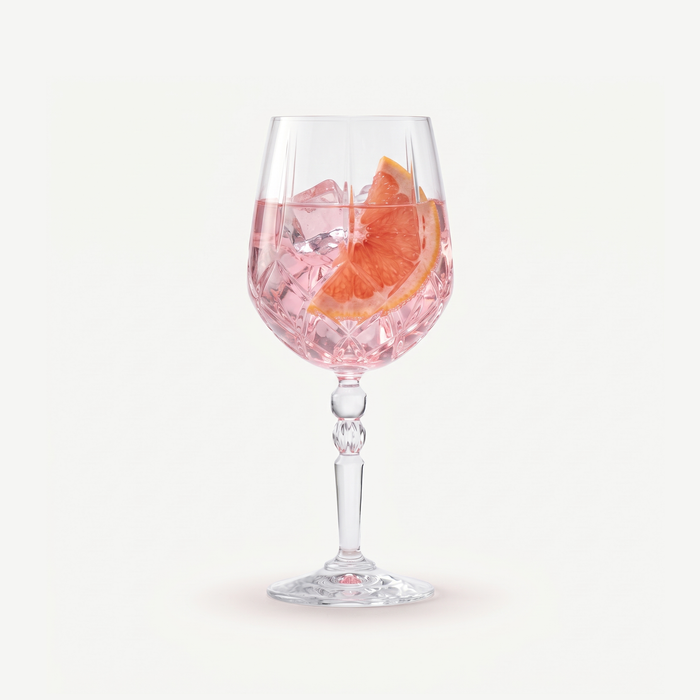
RCR Alkemist Gin and Tonic Glass 67 Cl - 6 Pieces
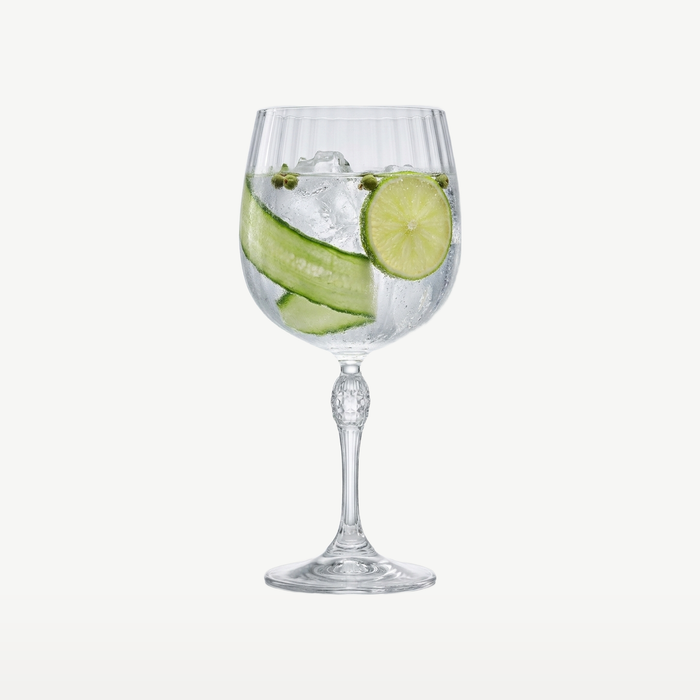
Bormioli Rocco America'20S Gin and Tonic Glass 74 Cl - 6 Pieces

Onis N.Y.C. Gin and Tonic Glass 59 Cl - 6 Pieces

Pasabahce Elysia Gin and Tonic Glass 50 Cl - 4 Pieces

The recipe for an alcohol-free gin and tonic
with 0.0 gin and lots of ice
Put the Copa glass in the freezer for ten minutes. Then fill it right to the rim with large, solid ice cubes.
Pour the alcohol-free gin over the ice and stir for five seconds with a bar spoon. This chills the glass and gin to the same temperature.
Slowly pour the tonic into the glass along the twisted bar spoon. This keeps as much fizz in as possible.
Squeeze the grapefruit zest over the glass, with the peel facing the drink, and tuck it between the ice.
Rub the rosemary sprig between your hands, place it in the glass, and stir just once more at most.
What did you think of this recipe?
One click on a star is enough. If you add a comment, we’ll review it before it appears here.
Save this recipe
Send the Alcohol-Free Gin and Tonic recipe to your own email so you have it handy when you’re ready to make it. You’ll also receive a € 5 discount code for purchases of € 50 or more, for the glasses to go with it.
The story
According to the familiar story, Gin & Tonic originated in British India. The British drank their quinine in tonic water to ward off malaria and added gin to soften its bitterness. The alcohol-free version is much newer. In 2015, British company Seedlip launched an alcohol-free distilled spirit, showing that botanicals can release their aromas in water too. The major gin makers followed suit. Gordon's 0.0% launched in late 2020, and Tanqueray 0.0% in Spain and the United Kingdom in March 2021. Tanqueray takes the botanicals from its London Dry, including juniper, coriander, angelica and liquorice, and distills each one separately in water instead of alcohol. Officially, it cannot be called gin. Under European regulations, gin must contain at least 37.5 percent alcohol.
The right glass
We serve it in exactly the same glass as the original, a stemmed copa glass of around 50 cl. The rounded bowl holds the aromas of juniper and grapefruit. That matters even more with 0.0 gin, because without alcohol, the aromas are less easily released from the glass. There’s also room for plenty of ice to keep the drink cold without it becoming watery too quickly. And the stem keeps your hand away from the ice. Choose from our gin and tonic glasses.

RCR Alkemist Gin & Tonic Glass 53 cl (6 pieces)

RCR Timeless Gin & Tonic Glass 50 cl (4 pieces)
Both sets together € 83,90.
The right tools
For an alcohol-free gin and tonic, alongside the glass, use a bar spoon for stirring, a jigger for precise measuring, a zester for the twist, and large ice cubes. These are the bar tools we use ourselves; find them all in our bar tools & cocktail sets.


Glass set (our pick 01) + 4 bar tools together € 126,75.
What do you need to make an alcohol-free gin and tonic?
For an alcohol-free gin and tonic, you need an alcohol-free base. Popular bottles include Tanqueray 0.0% and Gordon's 0.0%. On each drink page, you'll find the alcohol percentage, how it tastes, which cocktails it works in, and which glass you need.


Variations & twists
Want it pink? Put three raspberries in the glass and gently press them with a bar spoon before adding the ice. With cucumber and a Mediterranean tonic, it becomes softer and greener. A slice of fresh ginger makes it sharper. If you prefer coffee to juniper, try the Espresso Tonic. Looking for a more bitter alcohol-free aperitif? Check out the alcohol-free negroni and the Alcohol-Free Spritz .
Serving tip
Get tonic in 20 cl bottles, not a large bottle. Each bottle pours exactly two glasses, then it's gone. That way, you never end up with tonic that's gone flat. Pour the tonic into the glass at the table. That fizz is part of the experience.
Good to know
Why alcohol-free gin behaves differently
Alcohol does more work in a gin and tonic than you might think. It adds weight on your palate and a little warmth, and carries the aroma of the botanicals to your nose. A 0.0 gin is essentially water with distilled botanicals and has none of that. That’s why this recipe uses 1 part gin to 2 parts tonic, not 1 to 3. With more tonic, you can barely taste the gin. For the same reason, fill the glass to the brim with ice, because meltwater is your biggest enemy here. And garnish it more generously than you’re used to.
Tanqueray 0.0% or Gordon’s 0.0%?
Both are made with the botanicals of their own London Dry and both are intended to be drunk with tonic. Tanqueray describes its 0.0% as citrusy, with juniper up front, and made with juniper, coriander, angelica and licorice, among other ingredients. Gordon’s describes its as having a bold flavor carried by juniper and serves it with tonic and a lime wedge. At the bar, this is how we do it: Tanqueray gets a twist of grapefruit, which picks up the citrus notes, and Gordon’s gets a lime wedge. Taste them both neat with an ice cube first. You’ll notice the difference best without tonic.
Which tonic goes with non-alcoholic gin?
Go for a classic Indian tonic with a distinct quinine flavor. That bitterness gives the drink backbone, something it would otherwise get from the alcohol. Light and sugar-free tonics can make it taste thin, since sugar also adds body. If you want to consume less sugar, pour in a little less tonic rather than choosing a lighter one. Tonics with a distinctive flavor of their own, such as elderflower or rosemary, can easily overpower a 0.0 gin completely. Use them only if you want the gin to play mainly a spicy background note, and keep the garnish simple.
How long does non-alcoholic gin keep?
It keeps for less time than you’re used to with gin. Alcohol preserves, and without it, an opened bottle is more like a bottle of syrup. Tanqueray says to refrigerate its 0.0% after opening and use it within two months. Other brands state this on the label. Regular gin can go in the freezer, but this can’t, because without alcohol it will freeze. Straight from the fridge, it’s ideal. The ice has less work to do, and the flavor lasts longer.
How to make a non-alcoholic gin and tonic without 0.0 gin
No bottle of 0.0 gin at home? Then build the flavor right in the glass. Crush six juniper berries with the back of a spoon and put them in the glass with a strip of grapefruit peel and a sprig of rosemary. Fill with ice and pour in 15 cl of cold tonic. Wait two minutes before drinking to let the aromas infuse the tonic. It will be lighter than with 0.0 gin, but you’ll still recognize it as a gin and tonic. Skip the bitters. Angostura contains 44.7 percent alcohol, so a few dashes will make your drink no longer alcohol-free.
With and without alcohol side by side for a group
Serve the 0.0 version in the same Copa glass as a regular gin and tonic. That way, nobody needs to explain what they're drinking. A different garnish can help tell them apart, for example, rosemary for the alcohol-free version and lime for the regular one. Allow 5 cl per glass. A 70 cl bottle makes fourteen drinks, which takes 1.4 liters of tonic. Measure it carefully. It's easy to pour too little 0.0 gin by eye, leaving you with nothing but tonic. Find a good measuring cup in our jiggers.
Frequently asked questions
How do you make an alcohol-free gin and tonic?
Fill a chilled Copa glass to the rim with large ice cubes, pour over 5 cl of alcohol-free gin, and stir for five seconds. Pour 10 cl of chilled Indian tonic down a bar spoon and finish with a grapefruit twist and a sprig of rosemary. Since you use less tonic than with regular gin, the flavor holds up.
Which alcohol-free gin is best for a gin and tonic?
Choose a 0.0 gin where you can really taste the juniper, such as Tanqueray 0.0% or Gordon's 0.0%. Both are made with the botanicals from their regular London Dry and designed to pair with tonic. Mild, floral varieties quickly get lost under the tonic's bitterness. So taste it neat first, with an ice cube.
Is there really no alcohol in alcohol-free gin?
Almost none. Gordon's and Tanqueray label their gin as 0.0 percent, and Tanqueray adds that it contains no more than 0.015 percent. Just be careful what you add to it. Tonic is alcohol-free, but bitters aren't. Angostura is 44.7 percent alcohol.
What glass do you use for an alcohol-free gin and tonic?
Just use the same Copa glass as for a regular gin and tonic, around 50 cl and stemmed. The rounded bowl captures the aroma of the botanicals, holds plenty of ice, and the stem keeps your hand away from the drink. That way, the 0.0 version fits right in at the table.
Everything for your bar,
to one address
Hospitality-grade glasses, sold in sets. Order today, delivered quickly.
Shop the glasses →


