

Dom Ruinart Blanc de Blancs
The house’s prestige bottle, made exclusively from Grand Cru Chardonnay and released as a vintage. Freshly baked bread, chestnut, and flint, with bubbles so fine you feel them more than you see them.


What Grand Cru Chardonnay does to a bottle
Dom Ruinart is the house’s prestige line, and Blanc de Blancs is its white wine: one hundred percent Chardonnay, exclusively from Grand Cru vineyards in the Côte des Blancs and Montagne de Reims. In the house’s other bottles, Chardonnay adds freshness; here, it is the whole structure. There’s no Pinot Noir alongside it to round things out, so everything you taste comes from that one grape.
This is also a vintage champagne: not a continuous blend, but a separate bottle for each harvest, such as the 2013 vintage being served now. That explains its character. Whereas a young Chardonnay smells of citrus and white flowers, this one has developed notes of freshly baked bread and chestnut, with iris and flint beneath. Full-bodied and mineral at the same time, this is a bottle that calls for you to sit down and take your time.
In brief
Bread, chestnut, and flint
Baked bread & iris
Freshly baked bread and chestnut come through first, followed by coconut. Beneath them are iris, citrus, and a distinct flinty note.
Refined and mineral
Refined, mineral, and full-bodied at the same time. The bubbles are incredibly fine and feel more like a veil than a fizz, giving the wine a creamy texture.
Subtle and refined
Long and subtle, with dried citrus and a light quinine bitterness that balances the fresh acidity. That bitterness is exactly what makes this bottle finish so well.
The flavor profile of Dom Ruinart Blanc de Blancs served on its own. Vintages vary; bread, chestnut and flint are the bottle’s recurring notes.
Pour this bottle on its own
Serve at 8 to 10 degrees, but not ice-cold: this champagne is all about the aroma, which only opens up when the wine is allowed to warm a few degrees in the glass. Fill it about halfway and give it time.
From a wine glass
Pour 10 cl into a large white wine glass. More surface area means more aroma, and there’s plenty to smell in the notes of bread, chestnut and flint. The fine bubbles also linger for a long time in a spacious glass.
Wine glasses →As an aperitif
This bottle is mentioned as an aperitif. Pour about 12 cl per glass, keep it to simple snacks and avoid strong sauces: anything very acidic or salty cuts right through the mineral finish.
Glass: wide bowl →Not in a cocktail
Mixing this one is a waste. If you want a Kir Royal or a French 75, use the R de Ruinart or another simple brut; the crème de cassis or gin will overpower what this bottle has to offer.
Go to the R de Ruinart →Champagne cocktails, with a different bottle
Honestly, this champagne is best poured on its own. The classics below are still fun, but call for a simpler brut, as the liqueur or juice takes center stage.

French 75
Gin, lemon and syrup, shaken and topped up with bubbles. A dry brut is more than enough here.
Bellini
Peach purée topped with bubbles. The fruit does the work, so keep the bottle simple.
Mimosa
Equal parts orange juice and bubbles. Of all cocktails, this one deserves the cheapest bottle.
Champagne Cocktail
A sugar cube with bitters at the bottom, topped up slowly. The bitters take over from any champagne.Which glass does this champagne deserve?
With an aged blanc de blancs, the nose is half the story, so give it room. A large wine glass or a wide bowl lets the bread and flint notes emerge; a narrow flute keeps the bubbles neat but holds in the aroma.


More flavors from Ruinart

Ruinart
Where it all began. Read all about Ruinart on the brand page: origins, varieties and classic cocktails.
Go to Ruinart →
R de Ruinart
The house's only bottle made with all three grapes. Stone fruit and almond, with a fresh finish.
View R de Ruinart →
Ruinart Rosé
Guava, lychee and raspberry, with mint and pink grapefruit behind them. Its color comes from 18% red still wine.
View Ruinart Rosé →
Dom Ruinart Rosé
Pomegranate, blood orange and violet on a chardonnay base. The house's prestige rosé.
View Dom Ruinart Rosé →Questions about Dom Ruinart Blanc de Blancs
Can't find your question here? Read more on the Ruinart page or check out our cocktail recipes.
Everything about Ruinart →What is the alcohol content of Dom Ruinart Blanc de Blancs?
What's the difference from the standard Ruinart Blanc de Blancs?
Is this champagne sweet or dry?
Which vintage will I get?
What's the best way to serve it?
Buy Dom Ruinart Blanc de Blancs
Want the bottle at home right away? Order Dom Ruinart Blanc de Blancs online from Gall & Gall.
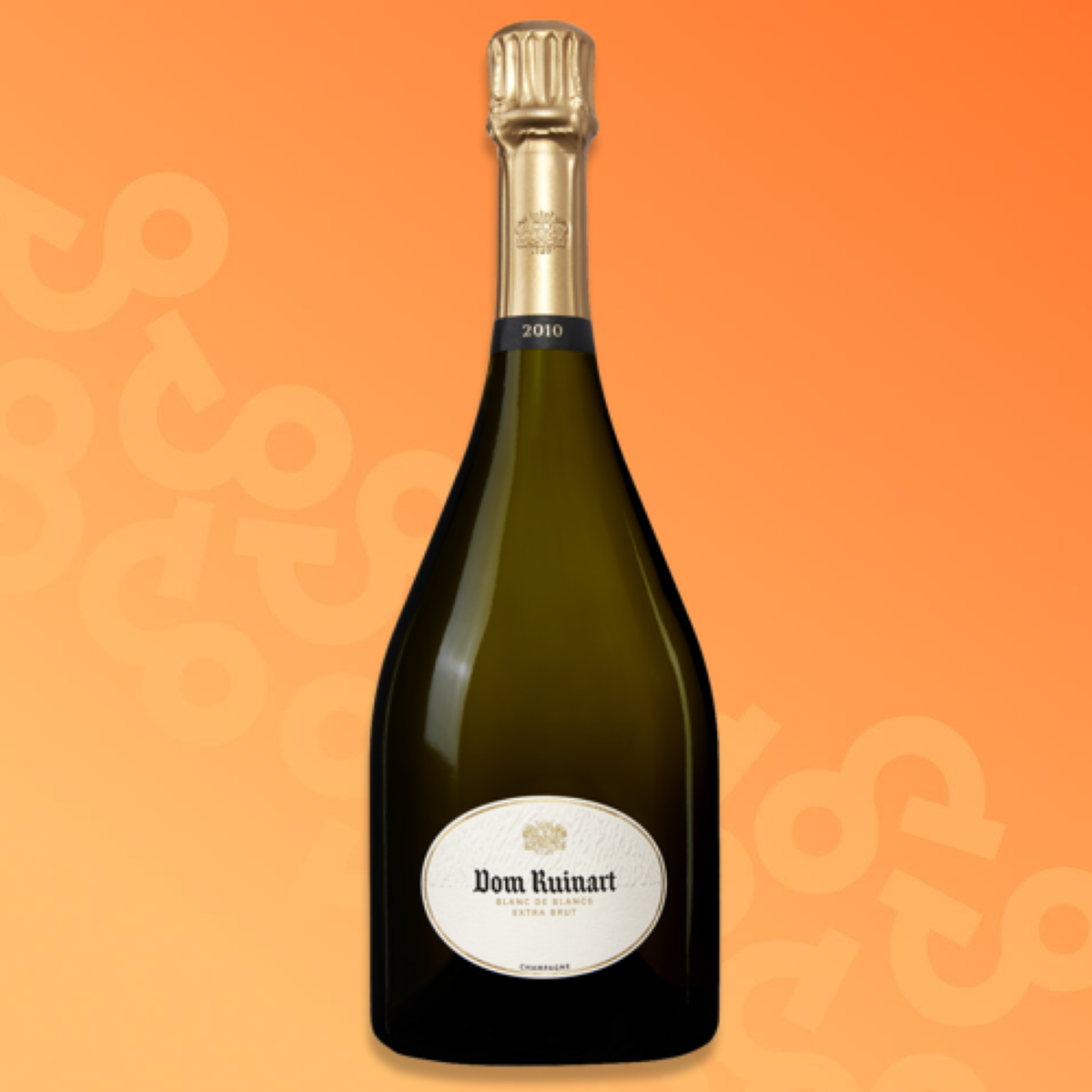
Dom Ruinart Blanc de Blancs
Prices as of November 3, 2026, as provided by Gall & Gall. You can see the current price and stock at Gall & Gall. Glazen.nl receives a small commission if you buy something through these links; you pay nothing extra. No 18, no alcohol.


