

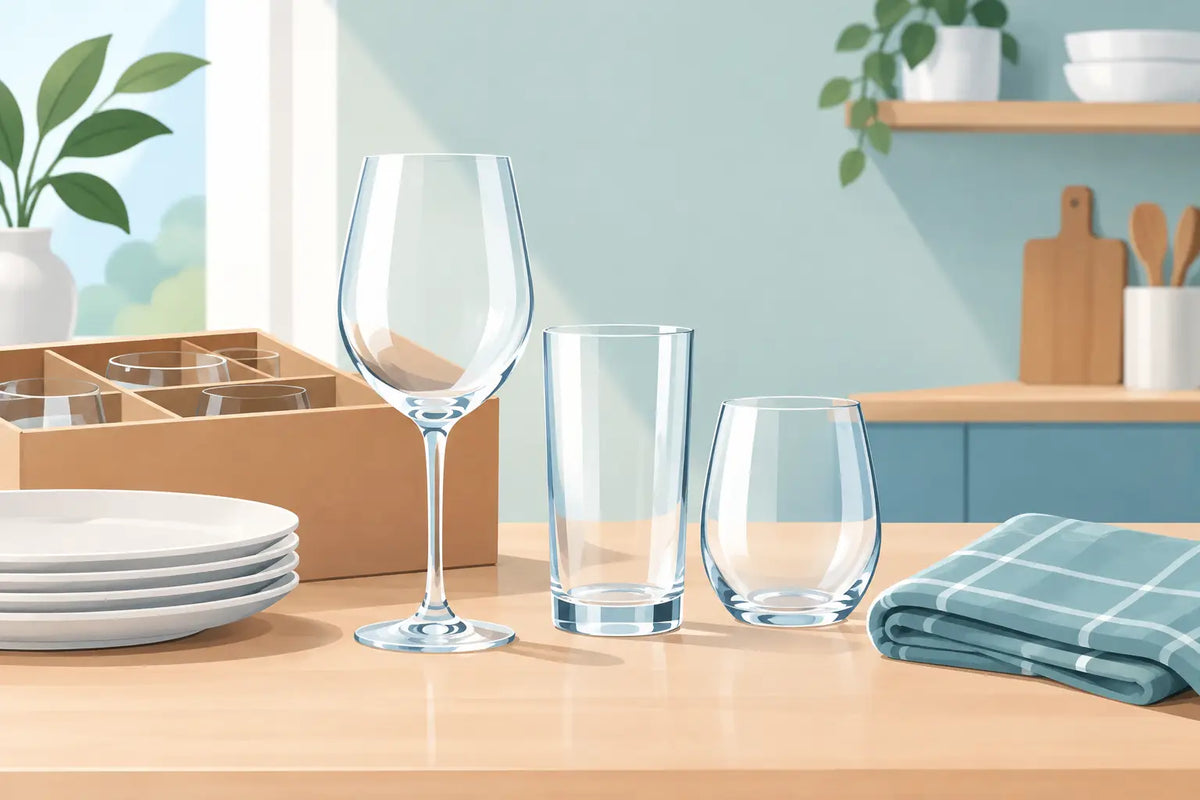
Glassware rarely breaks for no reason. Almost always, something goes wrong at one of five points: choosing the glass, unpacking it, serving, using the dishwasher, or storing it in the cupboard. Address those five points, and breakage rates will drop significantly, whether you have a set of wine glasses at home or put hundreds of glasses through the machine every week behind the bar.
This guide goes through those moments one by one, with practical rules you can put into practice right away. You’ll also learn exactly what Glazen.nl’s breakage-free guarantee covers, since it applies to shipping and not to a glass that falls off the table at home.
What breakage-free glassware does and doesn’t mean
No traditional drinking glass is unbreakable. Crystal glass, soda-lime glass, and thin mouth-blown glass each have their own appeal, but they’re still materials that break if handled incorrectly. Preventing breakage therefore comes down to three things: choosing wisely, using carefully, and knowing what to do if something does break.
That last point is taken care of. Glazen.nl offers a breakage-free guarantee for glassware that arrives damaged. Report it within three business days with a photo; the broken glass doesn’t need to be returned, and then you can choose between a replacement glass or store credit. The exact terms are on the shipping and guarantee page. Important to know: this guarantee covers shipping, not breakage during use. This guide is for the latter.
Choose glassware that suits its use
You can prevent most breakage before the first use. Think not only about what you’re pouring, but also about who’s holding the glass, how often it changes hands, and where it goes when it’s empty.
For a family, breakfast, or a busy bar, sturdy tumblers, highball glasses, and stackable water glasses are the obvious choice. They feel good in the hand, have a wide base, and can take a knock. In the tumblers and stackable glasses collections, you’ll find models made for exactly that. If you work on a patio, by a pool, or at a festival, the plastic unbreakable glasses are a serious option, even though this guide deliberately doesn’t refer to them as glass.
For dinners, tastings, and toasts, a more delicate glass may be in order. A thin rim enhances the experience, but calls for a steadier hand and more space on the table. These two worlds don't have to clash: a set of refined wine glasses for the table and sturdy water glasses for everyday use is the combination that works best for most households.
Consider the shape, base, and rim
A wide glass with a low, heavy base is more stable than a tall glass with a narrow stem. This matters especially for cocktail glasses, beer glasses, and carafes. A tall stem looks beautiful, but increases the risk of tipping over if the glass is on a thick tablecloth, a wobbly standing table, or a slippery tray.
The rim is the most fragile part. Thin glass makes for elegant wine and champagne drinking, but should never be wedged against another glass. A tiny chip on the rim isn't just a cosmetic flaw: it can grow into a crack and cause a cut.
Be mindful of temperature differences
Pouring hot water into an ice-cold glass, or holding a chilled glass under a warm tap right away, creates stress in the material. This is called thermal shock, and it's one of the few ways a glass can crack without being hit.
Use glasses designed for tea, coffee, and hot cocktails. Let a glass from the refrigerator come up to temperature first, and don't rinse a warm, used glass with cold water right away. Half a minute of patience can save a glass.
Safe unpacking starts with a steady surface
The most vulnerable minutes come right after delivery. Place the box on a table or on the floor, not precariously on a countertop. Carefully remove the packaging and lift the glasses out one at a time. Never pull on a stem or rim that's still wedged in cardboard or plastic wrap, as this puts force exactly where it shouldn't be.
Inspect each glass in daylight. Look not only for visible cracks, but also for small chips around the rim, stem, and base. If you spot any damage, don't use that glass for drinks. Report it within the warranty period and include a photo.
Wash new glasses before first use with lukewarm water and mild dish soap. This removes dust and packaging residue without putting too much strain on the glass.
How to prevent damage while serving
Glassware needs space. Don’t place glasses shoulder to shoulder on the table, and never fill a tray to the brim. Especially with coupes and tall long drinks, a few centimeters of space between them can be the difference between a smooth round and a chain reaction.
Hold wine glasses and champagne glasses by the stem, not the bowl. This keeps the glass clean and gives you more control. With tumblers and beer glasses, support the base whenever you move more than one at a time. Don’t carry more glasses than you can hold steadily, even if you know the route to the table by heart.
Carafes need extra care. Don’t fill them to the brim, as a full carafe is top-heavy and harder to pour from. Place it on a flat, dry surface and move it with both hands. The carafes collection shows which models have a wide base, a practical feature for everyday use.
In the hospitality industry, a consistent routine helps most. Check trays for moisture, remove damaged glasses from circulation right away, and make sure no one walks around the venue carrying glasses stacked inside one another. Working quickly is helpful, but working carefully takes less time than cleaning up broken glass.
Washing without cloudiness or cracks
The dishwasher is fine for many glasses, as long as you load it properly. Position glasses so they don’t touch: vibrations and a rotating spray arm can cause small chips that you may not notice until weeks later. Use a gentle cycle and go easy on the dishwasher detergent, because too much detergent or washing at too high a temperature can cause a cloudy film over time.
Only take the glasses out once they have cooled sufficiently. A warm glass feels sturdy, but is actually more sensitive to a sudden change in temperature. Hand washing is still the best choice for fine crystal glass, thin stems, and special carafes. Use lukewarm water, a soft sponge, and a small amount of detergent, and never twist the base and bowl at the same time. The full method is in the article on hand-washing wine glasses.
Dry with a clean, soft cloth and let the glass air-dry for a moment first. Don’t polish a cold, wet rim too vigorously or twist a cloth inside a narrow bowl. For a carafe, a soft brush works better than shaking it with grains or cutlery.
Smart storage matters just as much as the table
An overcrowded kitchen cabinet is a hidden cause of glass damage. Glasses that clink against each other when you open and close the cabinet can develop small, invisible chips that still weaken the glass.
So leave a little space between glasses, and only stack models designed for stacking. Store fine wine glasses, coupes, and anything with a stem upright on the base. Turning them upside down may seem hygienic, but it puts pressure on the rim and traps odors if the shelf isn’t dry.
Store heavy glasses and carafes on the bottom shelf, and keep the glasses you use every day at eye level. A high shelf isn’t the place for a heavy beer mug or a full carafe. If your shelf is slippery, put down a nonslip mat or soft liner.
When should you replace a glass?
A crack, a chip on the rim, or a base that no longer sits flat: that glass has to go. It’s tempting to repurpose it for flowers or pens, but don’t use it for drinking anymore. Tiny shards can come loose, especially around the rim.
With a set, replacing a glass is often smarter than continuing with one that doesn’t match. A uniform set looks more cohesive, is nicer to pour from, and makes serving easier. If you have a favorite collection for whisky or water, order a couple of spare glasses in time so your collection stays complete if one breaks later.
Frequently asked questions
What exactly does the breakage-free guarantee cover?
The breakage-free guarantee covers glassware that arrives damaged. Report it within three business days with a photo; you don’t need to return the broken glass, and then you can choose between a replacement glass or store credit. Breakage that occurs during use afterward isn’t covered.
Why does a glass suddenly crack?
Usually due to thermal shock or damage you haven’t noticed. A large temperature difference, such as hot water in a cold glass, creates stress in the material. A chip on the rim or base from earlier damage is the second most common starting point for a crack.
Are thin glasses always more fragile?
Not automatically, but they’re less forgiving. A thin rim feels nicer to drink from and lets the wine shine, while a slightly thicker rim can withstand more intensive use. So choose based on the situation: fine glassware for the table, sturdier glassware for everyday use and busy bars.








Leave a comment
This site is protected by hCaptcha and the hCaptcha Privacy Policy and Terms of Service apply.